.png)

Welcome to the Village
Chapter One is yours to read for free.
Take your time. Meet the characters. Step inside the story.
If you want to continue the journey when you reach the end,
you can purchase the complete book from the Village Bookshop
or continue reading as a Tribe Member inside the Members Library.
EPISODE I: Tonya
Where Does Carnival Begin?
Leicester was never the plan.
I had travelled far before-Harlem to Howard, New York to London, London to Accra, and Kingston to Port of Spain-but Leicester wasn't supposed to become part of my story. I had moved to London to work among museum collections, preserving objects that carried fragments of other people's histories. The work mattered, but the city never quite felt like home.
Then one weekend, almost on impulse, I boarded a train to Leicester.
I didn't come searching for community.
I came searching for air.
The first thing I noticed wasn't the buildings or the streets.
It was the rhythm.
Soft.
Distant.
Ancient.
Not music from a passing car.
Not someone testing speakers.
Something older.
The sound seemed to rise from the city itself, as though beneath the pavements lay generations of footsteps still remembering how to dance.
I stood outside Leicester Station with my overnight bag resting beside me, listening.
The scent of curry drifted from one direction.
Jerk smoke from another.
Fresh samosas.
Sweet plantain.
Coffee.
Migration itself seemed to ride the evening breeze, each aroma carrying a different journey that had somehow arrived in the same place.
Long before I understood it, I felt it.
Culture was breathing.
That had always been my gift.
Not magic.
Not prophecy.
Sometimes an ear for memory.
I noticed the stories hidden beneath accents, gestures, songs, recipes, silences. I felt the emotional residue people left inside places. My years studying the African diaspora had taught me that history rarely disappears.
It changes shape.
Sometimes it becomes language.
Sometimes it becomes food.
Sometimes…
it becomes rhythm.
The drumbeat continued.
Quiet.
Patient.
Waiting.
I followed it through Leicester's streets, past late-night takeaways, family-run shops and glowing windows where different worlds lived side by side. Every step carried me further from certainty and closer to something I couldn't yet name.
Then I found it.
A modest community hall tucked between two terraced houses.
Nothing remarkable from the outside.
Inside, warm light spilled through the windows. Laughter drifted into the street. Music breathed beneath conversation. The drumbeat I'd been following simply... stopped.
Not because it had ended.
Because I had arrived.
That was when I understood.
Carnival does not begin with feathers. It does not begin with steelpan. It does not begin on the road.
Carnival begins wherever memory survives.
And on that quiet Leicester evening, memory opened a door.
EPISODE II: Tonya
Where Does the Tribe Begin?
I stepped inside. Warm light settled over the room like an embrace I hadn't realised I'd been longing for.
The hall wasn't grand. Plastic chairs. A modest stage.
Homemade food lining folding tables.
Children weaving between conversations.
Elders laughing as if they had known one another for decades.
Yet something about the room felt impossibly familiar. Not because I recognised the people. Because I recognised the feeling.
Belonging.
Near the far wall, a woman stood on a ladder adding the final brushstrokes to a mural that wrapped itself across the hall.
Migration flowed into colour.
Colour flowed into movement.
Movement flowed into home.
Every stroke seemed to change the atmosphere inside the room.
Later I would learn her name was Maya. She didn't simply paint emotion. She invited everyone else to feel it.
Nearby, another woman stood quietly among the conversations, listening more than speaking. People naturally gravitated toward her, leaving calmer than they arrived. She wasn't directing the room. She was steadying it. That was Priscilla.She carried stillness the way some people carried music.
At the entrance, a young volunteer moved effortlessly from table to table, greeting newcomers, helping elders with their coats, finding seats before anyone needed to ask. There was nothing extraordinary about what he was doing. Except everyone smiled after speaking to him.
His kindness warmed the room more than the lights overhead. His name was Kai.
Near the sound desk, a man adjusted speakers with practised ease, tapping his foot to a rhythm no one else appeared to hear. Every adjustment he made seemed instinctive, almost as though he wasn't controlling the music.
He was listening to it. That was Zaire.
Even before we spoke, I sensed there was a rhythm inside him older than any song.
The final arrival came quietly. A tall man entered carrying the weariness of someone searching for answers he couldn't quite articulate. Instead of greeting the room immediately, he paused, eyes lowered toward the wooden floor, as though listening for something beneath it.
Only later did I understand.
He wasn't studying the floor.
He was recognising pathways the rest of us couldn't yet see.
His name was Elias.
At the time, we were simply six strangers.
An artist.
A counsellor.
A young volunteer.
A sound engineer.
A cultural strategist.
An anthropologist.
On paper, that's all we were.
Nothing about us suggested destiny.
That evening, the community hall was hosting a Diaspora Storytelling Evening.
It wasn't a festival.
It wasn't a performance.
It wasn't something people travelled across the country to attend.
It was beautifully ordinary.
Neighbours brought homemade food. Elders shared stories from islands, villages and cities left behind. Children ran between chairs while musicians quietly tuned their instruments.
Artists painted.
Poets recited.
People laughed.
People remembered.
Caribbean, African and Black British communities had gathered simply to spend an evening together. No one in that room realised history was quietly gathering too.
Then the music began. Steelpan met drum. Conversation became laughter. Feet found rhythm.
Maya's mural seemed brighter beneath the lights.
Priscilla closed her eyes, smiling softly as the room settled into harmony.
Kai welcomed another family through the door.
Zaire nodded gently with the beat.
Elias finally looked up from the floor.
And for reasons none of us could explain, we found ourselves standing together. No introductions had arranged it. No organiser had planned it.
Culture had simply gathered us into the same circle.
Looking back now, I know exactly where the Tribe began.
Not in a meeting.
Not in a business plan.
Not in an organisation.
The Tribe began the moment six people recognised one another through culture before they ever knew each other's names.
None of us imagined that one ordinary evening would become the beginning of something much larger.
Years later, we would create spaces where strangers could become neighbours, journeys could become homecomings, and community could be discovered one gathering at a time.
But that night, we were simply six people saying yes to the same rhythm.
EPISODE III: Tonya
Why Does Carnival Matter to the Diaspora?
People often ask how the Tribe of Travelers began.
They expect a strategy. A vision statement. A five-year plan.
Instead, I tell them about one ordinary evening in Leicester.
About a community hall.
About six strangers.
About a rhythm that refused to let any of us remain strangers for long.
Years later, I understand what happened that night far better than I did then.
Maya carried the colours of Antigua through every brushstroke she painted.
Priscilla carried the quiet strength of Kenya, teaching us that stillness could hold a community together.
Kai carried the warmth of Black British Leicester, proving that welcome is one of the greatest acts of leadership.
Zaire carried the pulse of St. Vincent, reminding us that rhythm can protect as surely as words.
Elias carried the pathways of Nigeria, recognising connections long before the rest of us could see them.
And I carried memory.
The echoes of ancestors who survived oceans and centuries so that one day their descendants might recognise one another again.
Six people.
Six migrations.
Six histories.
Six gifts refined by lived experience rather than myth.
We did not arrive carrying the same passports.
We arrived carrying the same longing.
That evening gave us somewhere to place it.
Years later, we realised one gathering wasn't enough.
We wanted others to experience what we had found in that little community hall. So we created Friendly Fridays.
Not simply as an event.
But as a monthly homecoming. A place where strangers could become neighbours.
Where cultures could meet without competition.
Where stories were shared before they were forgotten.
Where music reminded us that belonging isn't inherited - it is created together.
That is why Carnival matters.
Not because of costumes.
Not because of parades.
Not because of celebration alone.
Carnival matters because it remembers what history tried to scatter.
It protects joy when joy becomes resistance.
It gives displaced people permission to belong.
It teaches children where they come from before the world tells them who they should become.
It reminds communities that identity is not preserved inside museums.
It is preserved in music.
In food.
In movement.
In storytelling.
In laughter.
In gatherings like the one that changed our lives.
Twenty years have passed since that summer evening.
The same streets still carry rhythm.
The same communities still gather.
The same memories still rise whenever culture is given room to breathe.
Leicester did not become the Global Village because six people built an organisation.
It became the Global Village because generations before us kept dancing, kept remembering, and kept making room for one another.
The village was already alive.
We simply learned how to hear it.
What none of us realised that night was that our story would never remain in one city.
Over the years, the roads would carry us across Britain and beyond - following communities, sharing stories, discovering that every place holds its own rhythm.
Each journey would add another heartbeat to the Global Village.
But before we travelled, we had to learn to listen.
The rhythm that found me in Leicester had always been travelling.
And no one understood that better than Zaire.
The next chapter belongs to him.
The Village Doesn't End Here
You've reached the end of Chapter One.
Tonya's journey into the Global Village has only just begun.
Continue When the Village Dances and discover where the people, stories and unexpected connections of that first evening lead next.

📚
Continue in the Members Library
Tribe Members can continue the story as part of their membership.

Welcome to the Village
Chapter One is yours to read for free.
Take your time. Meet the characters. Step inside the story.
If you want to continue the journey when you reach the end,
you can purchase the complete book from the Village Bookshop
or continue reading as a Tribe Member inside the Members Library.
EPISODE I: Maya
What Did I See Before Anyone Else?
Twenty years later, people often ask how I became part of the Tribe.
They imagine I came searching for community.
The truth is...
I came because someone asked me to paint.
Back then, Leicester was simply another commission.
Another community hall.
Another blank canvas waiting for colour.
By then, painting community spaces had quietly become my work.
Schools.
Libraries.
Youth centres.
Church halls.
I wasn't painting buildings.
I was painting the stories communities wanted their walls to remember.
Birmingham had taught me to look upwards.
I grew up in Handsworth, where colour seemed to compete with music for your attention.
Most people watched the streets.
I watched the walls.
Murals told stories before anyone spoke.
Shop signs carried history.
Carnival colours appeared long before Carnival itself arrived.
Looking back now, I realise Handsworth taught me something no art school ever could.
Communities reveal themselves long before they introduce themselves.
----------------------------------------
I thought this would be no different.
I packed my brushes before sunrise.
Wrapped the rolled canvas in old cotton sheets.
Loaded more paint into the car than any sensible artist should ever carry.
And drove towards Leicester wondering only one thing.
How much wall space had they given me this time?
The motorway north unfolded in long ribbons of grey, but even concrete has colour if you spend your life looking closely enough.
Early sunlight turned service stations gold.
Brick warehouses shifted from rust to amber as the morning warmed.
Rapeseed fields flashed brilliant yellow before disappearing behind hedgerows.
By the time the signs welcomed me to Leicester, I had already begun painting the journey in my mind.
----------------------------------------
Because community wasn't on my mind.
Composition was.
Artists learn very quickly that empty spaces tell stories.
Before people arrive…
a room reveals what it is waiting for.
Some rooms wait for silence.
Some wait for order.
Some appear to be waiting for nothing at all.
I had no idea what this room expected.
But I knew it was waiting for something.
The room wasn't beautiful.
Not yet.
Artists notice strange things.
We see colour before conversation.
Light before language.
Space before movement.
Long before people become a community, we notice the spaces where one might begin.
That has always been my gift.
Not prophecy.
Not certainty.
Simply an eye for possibility.
I had arrived early that afternoon carrying rolled canvases, brushes and far more paint than one community hall could possibly need.
The room itself was ordinary.
Stacked plastic chairs.
Folded tables.
A modest stage waiting for its purpose.
Volunteers moving quietly between one task and another.
Nothing about it suggested history.
Nothing about it announced destiny.
Yet I could not stop looking at the walls.
Not because of what they were.
Because of what they were waiting to become.
----------------------------------------
Everyone else saw people arriving.
I watched the spaces between them.
A child wandered across the hall before his mother called him back.
Someone laughed from the kitchen.
An elder moved two chairs closer together without anyone asking.
A volunteer abandoned the timetable because someone needed help carrying food.
Little things.
Forgettable things.
Except they weren't.
Every gesture painted something invisible.
Trust.
Welcome.
Belonging.
The mural I had come to paint suddenly felt much smaller than the one unfolding in front of me.
Because no brush could create what these people were creating together.
Then the music began.
Not loudly.
Just enough for conversations to change rhythm.
People who had arrived as strangers began standing closer together.
Children crossed invisible boundaries that adults still respected.
Someone introduced themselves.
Someone remembered another person's name.
Someone stayed longer than they had planned.
I looked at the blank wall one last time.
For the first time that day, I realised it wasn't the most important canvas in the room.
The community was.
Twenty years later...
People still ask what I saw before everyone else.
The truth is...
I didn't see a finished village.
I saw people quietly creating one.
That evening taught me something I have carried ever since.
Culture isn't something we display.
It is something we make.
Together.
And perhaps that was the first brushstroke.
Not the paint I placed on the wall.
But the moment I recognised that people were already creating something before they had a name for it.
And twenty years later, as our Global Village stretches far beyond Leicester, I find myself asking the very same question.
How do you keep a village alive...
when it keeps growing?
And sometimes...
seeing possibility before everyone else is the first brushstroke.
EPISODE II: Tonya
Who Sends Maya the Invitation?
Twenty years change the way you measure distance.
When we first met, distance was something we could name.
Countries.
Oceans.
Histories.
The homes people left behind and the ones they were trying to create.
But after twenty years of building the Global Village, I learned that distance is not always measured by how far someone has travelled.
Sometimes it is measured by how close people stand while still feeling apart.
That was the challenge of growth.
The village had grown.
The question was whether everyone inside it still felt at home.
By then, the Global Village was no longer one room in Leicester.
It was conversations happening across cities.
It was communities sharing ideas.
It was people discovering that culture did not belong to one generation, one country, or one moment in time.
It belonged to everyone willing to carry it forward.
I had watched Maya’s paintings become meeting places.
I had watched Zaire turn sounds into memories.
I had watched Elias connect communities before most people even realised they were connected.
I had watched Kai welcome strangers until they stopped feeling like strangers.
I had watched Priscilla create spaces where people felt safe enough to be honest.
As for me...
I listened.
Because after all these years, I still believed the same thing.
Communities speak before they ask for help.
You just have to be willing to hear them.
----------------------------------------
Maya’s studio had changed very little.
That was something I admired about her.
The Global Village had expanded.
Her responsibilities had grown.
Her name had travelled further than Leicester.
But the room where she worked still reflected the same artist who had walked into that first community hall twenty years earlier.
Paint brushes rested beside notebooks.
Photographs were pinned beside sketches.
Half-finished pieces leaned against walls waiting for their next conversation.
Maya never liked calling them unfinished.
"Still becoming," she would say.
That was how she saw everything.
Art.
Communities.
People.
I was visiting because we were preparing for the next stage of the Global Village.
The London Autumn Tour was approaching, and there were conversations happening about how we continued growing without losing the thing that made people feel they belonged in the first place.
The danger was always the same.
When something grows, people start measuring success by numbers.
How many members?
How many locations?
How many events?
But Maya and I had learned long ago that numbers never told the whole story.
A room could be full of people and still feel empty.
A village could be large and still feel small.
She was standing in front of a new piece when the message arrived.
I noticed her expression before she said anything.
Maya had always been easy to read if you knew what to look for.
Not because she was expressive.
Because she became quiet.
She picked up her phone.
Read the message.
Read it again.
Then she looked at the painting in front of her.
"What is it?" I asked.
She handed me the phone.
The message was not from an organisation asking for a partnership.
It was from someone Maya had known for many years.
Someone whose story began long before the Global Village existed.
Long before anyone called her a founder, Maya was already helping people see themselves in the spaces around them.
Through her work in public art, diaspora arts projects, and community storytelling, she had mentored young artists searching for ways to connect creativity with identity.
This person was one of them. A young artist Maya had encouraged years earlier while building diaspora arts programmes in Birmingham.
Maya had never taught them how to copy her work.
She had taught them something more important.
Communities deserve to tell their own stories.
The message explained that younger generations were drifting away.
Older generations worried their stories were disappearing.
They had created a beautiful space.
They had music.
They had food.
They had events.
They had people who cared.
The building existed.
The events existed.
The passion existed.
"They want me to help them design a space?" Maya asked.
I shook my head.
"No," I said.
She looked at me.
"They want you to listen."
For a moment, she didn't answer.
Because that was the difference.
Twenty years earlier, Maya had walked into a room thinking she was there to paint a wall.
She left understanding that the most important things happening in that room could not be painted.
They had to be created.
Together.
"They think I know what to do," she said.
I smiled.
"No. They think you know how to help people discover what they already have."
She looked back at the message.
Then toward the artwork on her wall.
I recognised that look.
It was the same expression she had worn all those years ago when she first saw possibility before anyone else.
Curiosity.
Uncertainty.
A question forming.
The invitation was not asking Maya to build another Global Village.
It was asking something much harder.
Could she help another community discover its own?
And after twenty years, that was the question we were still learning to answer.
How do you carry home somewhere else...
without asking them to become you?
----------------------------------------
"I don't know if I am the right person," Maya said quietly.
I looked at her.
After everything we had built, after everything she had given, Maya still questioned whether she belonged in the rooms she helped create.
That was one of the things I loved about her.
She never assumed she had all the answers.
She always arrived ready to listen.
"Twenty years ago, you walked into a room you thought was just another commission," I said. "You weren't looking for a community either."
She smiled.
"I was looking for a wall."
"Instead you watched a village being created."
For a moment, neither of us spoke.
Because we both knew this invitation was not really asking Maya to paint anything.
It was asking a different question.
Could the lessons we learned in Leicester travel?
Could belonging be shared without being copied?
Could one village help another village discover itself?
Maya looked back at the message.
Then she looked toward the unfinished artwork on her wall.
And I knew.
The invitation had already changed something.
Not because she had agreed to go.
Because part of her had already started imagining what she might find.
A question.
How do you help people find home...
when they have already built the place?
EPISODE III: Zaire
Why Can Maya Not Ignore the Invitation?
There are moments when a rhythm changes before anyone hears the music.
Most people notice the sound first.
A drum beginning.
A voice rising.
A crowd moving together.
But after twenty years of listening to communities, I learned something different.
The rhythm begins before the song.
It begins with a question.
A hesitation.
A feeling that something is waiting to happen.
That was what I felt when Tonya told me about Maya’s invitation.
Not excitement.
Not surprise.
Something deeper.
Recognition.
Because I had learned to trust those moments.
The moments when a community reaches out because something inside it is trying to remember itself.
----------------------------------------
When Tonya told me about the invitation, I wasn't thinking about the message.
I was thinking about Maya.
I had known her long enough to imagine exactly how she would have reacted.
Not with excitement.
Not with certainty.
With questions.
Maya had never believed experience automatically made someone the right person.
If anything, the more she learned, the more carefully she listened.
A few days later we met in her studio.
Her phone rested among brushes, sketches and paint-stained notebooks.
The message was still open, but Maya's attention had drifted somewhere else.
She was no longer studying the invitation.
She was studying herself.
"I don't know what they need from me," she said quietly.
It wasn't the message she doubted.
It was her place inside it.
She had spent years helping communities discover their own stories.
Perhaps, she wondered, it was someone else's turn now.
Perhaps her role had been to begin the work.
Perhaps the next generation no longer needed her.
----------------------------------------
I understood why she felt that way.
Every generation eventually reaches that question.
When you have given everything you know...
what happens next?
Do you continue leading?
Or do you create space for others to lead?
The Global Village had never been built around one person.
That was something Maya understood better than anyone.
The strongest communities are not created because one person has all the answers.
They grow because people keep adding their own stories.
But there was something about this invitation that stayed with her.
Something she could not ignore.
----------------------------------------
We talked about the invitation for a long time.
At first, Maya spoke about practical things.
The journey.
The community.
Whether someone else might be better suited.
But after a while, she stopped talking about logistics.
She started talking about people.
The older generation who feared their stories would disappear.
The younger generation trying to understand where they belonged.
It sounded painfully familiar.
Twenty years earlier, we had all been asking different questions that came from the same place.
We were searching for somewhere to belong.
I listened.
Because I realised she was no longer describing the invitation.
She was describing the space between two generations.
Then she became quiet.
I recognised that silence.
It was the same silence I had heard years earlier whenever Maya stopped looking at what was in front of her...
and started seeing what could become.
She looked down at the message one last time.
"This isn't really about the building," she said.
She wasn't speaking to me anymore.
She was thinking aloud.
"It's about what happens inside it."
That was when I knew the invitation had already begun changing her.
She had stopped asking whether she was the right person.
She had started asking what the community truly needed.
----------------------------------------
That was the moment everything changed.
Because Maya finally understood.
They were not asking her to build another Tribe of Travelers.
They were not asking her to recreate Leicester.
They were not asking her to give them the Global Village.
They were asking her to help them discover their own story .
The same way she had discovered that first community hall was never empty.
It was waiting.
----------------------------------------
Neither of us spoke for a while.
Maya simply turned back towards the canvas waiting on her easel.
She didn't pick up a brush.
She simply stood there, looking.
I had seen her do that hundreds of times.
Thinking always began before painting.
She studied the colours.
The shapes.
The spaces between them.
Most people see a blank area and think something is missing.
Maya sees a possibility.
That is why she cannot ignore invitations like this.
Because she does not see empty spaces.
She sees unfinished stories.
----------------------------------------
Twenty years earlier, we were all strangers in Leicester.
We did not know what we were building.
We only knew something was happening.
A sound.
A feeling.
A rhythm.
Now another community was standing at that same beginning.
And Maya could hear it.
Before the music started.
Before the doors opened.
Before the village knew it was becoming one.
----------------------------------------
That is what I felt when I heard about the invitation.
Not the beginning of another project.
The beginning of another rhythm.
And after twenty years, I knew Maya well enough to understand something.
She could walk away from a wall.
She could walk away from a title.
She could walk away from recognition.
But she could never ignore a community trying to find its voice.
Because that was the rhythm she had always followed.
The one beneath the music.
The one that asks the same question every village eventually has to answer.
How do we remember who we are...
while becoming who we are meant to be?
EPISODE IV: Elias
What Does Maya Leave Behind?
There are journeys you choose.
And there are journeys that choose you.
Most people think I notice destinations.
Cities.
Roads.
Maps.
They are wrong.
I notice the connections between them.
That has always been my gift.
While others see separate places, I see pathways.
The invisible threads that pull people towards moments they do not yet understand.
That was why Maya's invitation unsettled me.
It wasn't because she had been asked to help another community.
The Global Village had grown beyond Leicester years ago.
Our work had carried us across towns, cities and countries.
We had travelled together.
Sometimes alone.
Sometimes in pairs.
The journey itself was never the question.
This time...
the destination was.
----------------------------------------
A few evenings later, we met for our usual midweek dinner at Tonya's house.
Twenty years earlier we had gathered in community halls.
These days we gathered around one another's tables.
Tonya believed every important conversation deserved a good meal.
So, her house had become the place where conversations were allowed to take their time.
As I pulled onto the drive, the garage door was open.
Two cars already sat inside.
Children's bicycles leaned against one wall beside half-packed carnival costumes, steelpan cases and painted props waiting for another season.
The smell reached me before the front door did. Barbecue chicken rested beside trays of baked macaroni and cheese, roasted vegetables, cornbread, rice and peas, and a peach cobbler cooling on the kitchen counter. Tonya cooked the way she lived—every meal was a conversation between the places she'd called home.
Some places stop being buildings.
They become traditions.
They become safe places.
They become family.
Tonya's house had quietly become all three.
----------------------------------------
Dinner had already finished by the time everyone drifted into the garden.
The evening still carried the warmth of late summer.
Wine glasses rested on the table.
Coffee appeared without anyone remembering who had made it.
At the far end of the garden Zaire was already lighting a cigar. Beside him sat three untouched cigars and matching brandy glasses, waiting for the rest of us.
Kai wandered over a moment later, laughing into a video call.
"I know," he smiled. "Tell them I'll be there next month."
He listened for another moment before shaking his head.
"No, Naomi... you're the manager now. Make the decision."
He slipped the phone into his pocket wearing the quiet smile only proud parents ever seem to master.
"Naomi's just checked in that Summer Escape group," Kai said, slipping his phone into his pocket. "Thirty-six Tribe Members from nine different communities. Most of them have spent years talking in the app but tonight's the first time they've actually met."
He chuckled.
“There's a couple from Toronto sharing breakfast with a retired teacher from Cape Town, two sisters from Birmingham have already taken three students from Lagos under their wing, and somebody's already organised tomorrow's beach barbecue."
He shook his head.
"Apparently dinner finished an hour ago, but nobody wanted to leave the table."
"That's a good problem to have," Tonya smiled.
"She's got it under control," Kai said. "Apparently I'm only allowed to answer the phone when she wants to remind me she's the Lead Host now."
"The nerve," Zaire laughed.
Every few minutes the patio doors slid open.
"You should all be in bed!" Tonya called without looking around.
"We're thirsty, *mummy*!" Njema protested.
"Malik's thirsty," Malika quickly corrected, wrapping one arm around the toddler before he wandered outside in nothing but dinosaur pyjamas.
Malik simply held up his empty cup with both hands.
As far as he was concerned, that explained everything.
Before any of us could respond, Nai appeared in the doorway carrying a nappy bag in one hand and her phone in the other.
At sixteen she insisted she was far too old for babysitting.
Watching her herd the younger children towards the stairs with the authority of someone who had been doing it for years suggested otherwise.
One escaped.
"Dad!" Baraka launched himself across the patio.
Zaire caught him one-handed without ever removing the cigar from between his lips.
"You're getting too big for that," he laughed.
"Five more minutes." Baraka pleaded before Zaire could say a word.
"You said that ten minutes ago."
"Nai's being a pest."
"I heard that," Nai replied, taking hold of his hand.
Tonya stopped every child as they passed, kissing each sleepy forehead before sending them upstairs.
As all of the chaos settled I looked around the garden and realised our children had never needed to learn what community meant.
They had been born into it.
It was impossible to tell whose children belonged to whom anymore.
Twenty years of shared birthdays, school runs, sleepovers, carnival rehearsals, Friendly Fridays and Sunday dinners had quietly erased those boundaries.
They no longer thought in terms of my mum or your dad.
They simply knew they belonged.
Family.
----------------------------------------
Once the children had finally disappeared upstairs, Zaire reached for the speaker sitting beside him.
"Music always sounds better after people have eaten."
"That's because by then everyone's too full to argue with your playlist," Priscilla laughed.
Zaire pressed play anyway.
The opening notes of an old soul record drifted across the garden.
"See?" he grinned. "Music knows when dinner's finished."
Priscilla rolled her eyes.
"Or maybe you've just trained us not to argue anymore."
Even Maya smiled.
But only with her mouth.
Not with her eyes.
Most people would never have noticed.
We did.
We had watched one another through births, funerals, victories, failures and everything between.
After twenty years, silence becomes another language.
No one asked about Birmingham immediately.
There was no need.
The invitation had brought Birmingham into the room long before anyone spoke its name.
----------------------------------------
The silence settled comfortably between us before Kai finally spoke.
"I still can't believe you're going back."
Maya looked down at her plate.
"I can't either."
No one rushed to fill the silence.
Priscilla reached across the table and rested her hand over Maya's.
It was enough.
After a while, Maya smiled sadly.
"I've spent fifteen years pretending Birmingham is just another city."
Nobody corrected her.
None of us needed her to explain.
----------------------------------------
Her mother had died there.
Not after a long illness.
Not peacefully.
Violently.
Suddenly.
The kind of loss that tears time into two lives...
the one before...
and the one after.
The person responsible had never been found.
The investigation faded.
The questions never did.
After the funeral, Maya's father packed the pieces of a life he no longer recognised and returned to Antigua.
The house was sold.
The neighbourhood changed.
And Birmingham became the one place Maya could never bring herself to revisit.
Not because she hated it.
Because she had loved it first.
----------------------------------------
Over the years, the Global Village grew.
Partnerships opened.
Events were held.
Communities formed.
Even Birmingham found its place within the wider network.
Kai visited.
Tonya visited.
Sometimes Zaire.
Sometimes Priscilla.
Sometimes I did.
Maya never came.
She always found another commitment.
Another journey.
Another reason.
None of us challenged her.
Grief keeps its own calendar.
----------------------------------------
"It isn't Birmingham I'm afraid of," Maya said quietly.
"I know."
She looked towards me.
"You do?" I nodded.
"You aren't afraid of the city."
I paused.
"You're afraid of meeting the version of yourself that never left."
The room fell silent.
Not because I had revealed anything new.
Because sometimes the truth sounds different when someone else says it aloud.
----------------------------------------
Zaire leaned back in his chair.
"The rhythm's been pulling you home for years."
Tonya smiled gently.
"You've just been dancing around it."
Even Maya laughed at that.
Only briefly.
But it was real.
----------------------------------------
Then Kai spoke.
"I'll drive."
Maya looked at him.
"You don't have to."
"I know." He smiled.
"But you shouldn't have to make that journey by yourself."
Nobody argued.
Nobody voted.
It simply felt right.
Sometimes friendship doesn't announce itself.
It reaches for the car keys.
----------------------------------------
That night, when everyone had gone home, I kept thinking about pathways.
Since the invitation arrived, I had assumed it was about another community discovering its story.
Perhaps it was.
But I had been looking in the wrong direction.
Before Maya could help Birmingham remember itself...
Birmingham was asking Maya to remember herself.
That was the real journey.
Everything else would simply happen along the way.
----------------------------------------
Two mornings later, the sun had barely climbed above Leicester as we stood together on Maya's driveway as Kai placed the last overnight bag into the boot.
Nobody made speeches.
Nobody tried to make the moment lighter than it was.
Sometimes love sounds like conversation.
Sometimes it sounds like,
"Call us when you arrive."
Maya looked at each of us in turn.
Not because she was leaving Leicester.
Because she was returning to Birmingham.
They climbed into the car.
Kai started the engine.
We stood together until the car disappeared at the end of the road.
Pathways have a strange way of circling back.
For fifteen years Maya had believed she was avoiding Birmingham.
Sometimes we think we've been avoiding a road.
All the while...
the pathway had never moved at all.
It had simply been waiting for Maya.
The Village Doesn't End Here
You've reached the end of Chapter One.
Maya's journey in the Global Village has only just begun.
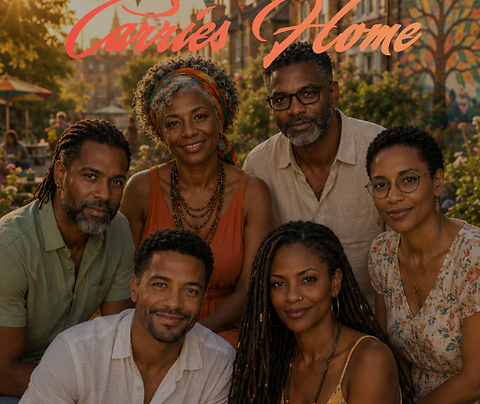
Continue When the Village Carries Home and discover where the people, stories, and uncovered secrets lead next.
📚
Continue in the Members Library
Tribe Members can continue the story as part of their membership.